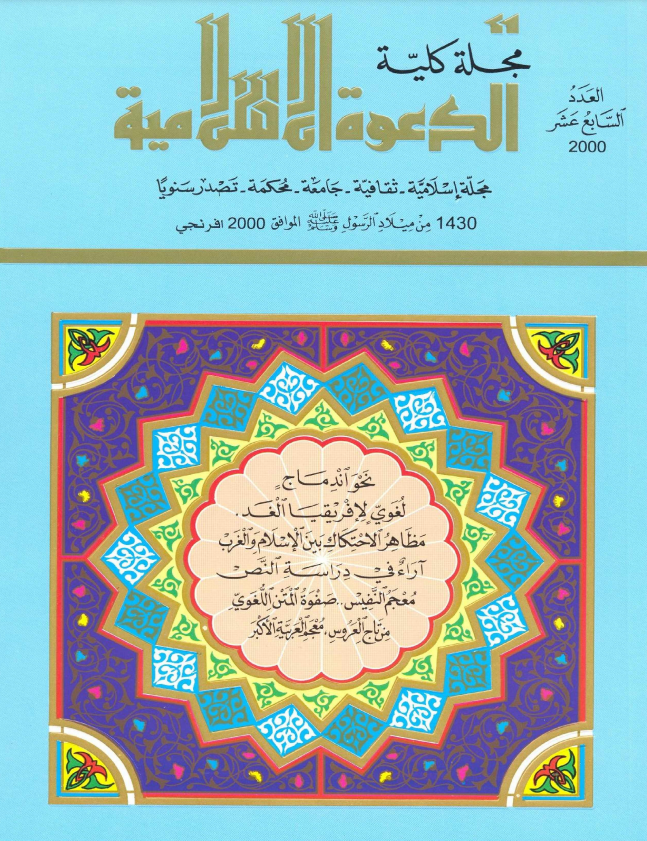
Issue 1 covers key topics in Islamic thought and culture, including the Quran as legislation, Islamic civilization, the image of the Prophet in the West, and issues of Caliphate and creed. It features studies on Muslims in Japan, Arabic literature in Libya, manuscripts, and Islamic education. It also discusses the influence of Islam and the Quran on spreading Islamic libraries and includes an English study on Islam in Ghana and Mali.
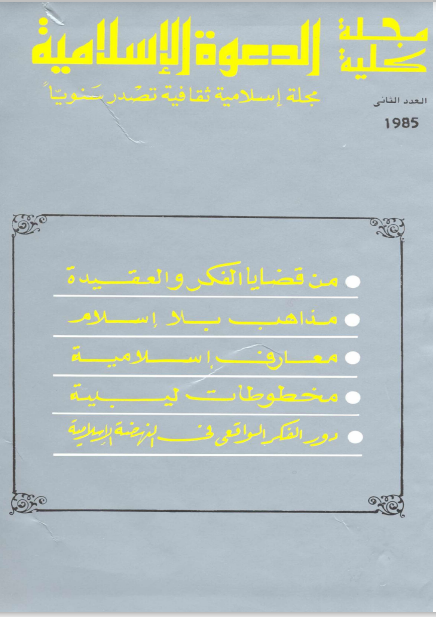
Issue 2 of the Journal includes a valuable collection of studies covering intellectual and doctrinal topics, along with linguistic, educational, and cultural issues. It begins with discussions on matters of thought and creed, followed by an analysis of sects without Islam, and the significance of the Quran and Arabic language in Islamic thought. The issue addresses the role of realistic thinking in the Islamic renaissance, the consultative roles of the Prophet Muhammad (PBUH), fundamentals of international relations, and moral education in Islam. It also includes studies on social relations in Islam, characteristics of nominative and verbal terms, literary criticism and history, as well as research on Libyan manuscripts and Islamic history in Andalusia and Sicily. Further topics cover educational history in Tripoli, teaching Arabic literature, and general cultural and intellectual affairs.
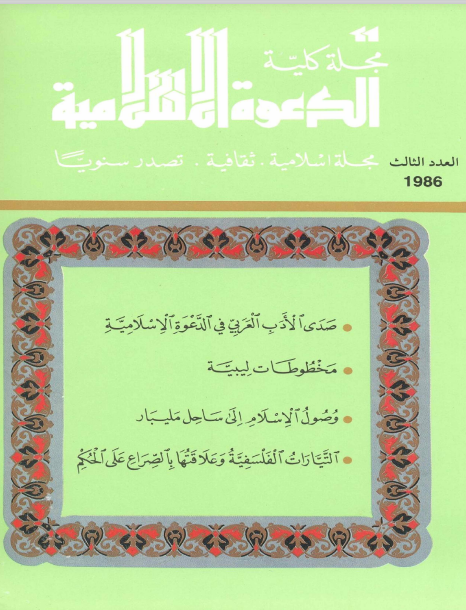
Issue 3 includes a distinguished collection of research covering various topics such as Islamic history, thought, creed, language, heritage, and philosophy. It opens with a study on the Crusader aggression against Muslim lands and includes research on the impact of Arabic literature in Islamic preaching and the qualities of an effective preacher. The issue explores issues of Islamic thought and creed, philosophical currents related to political conflicts among Muslims, the fundamentals of Islamic legislation, and Avicenna’s theory of emanation. Linguistic studies on Quranic metaphor and semantic implications are also featured, alongside a study of the figure Abu Amr ibn al-‘Ala’. Heritage studies review Libyan manuscripts and the spread of Islam to the Malabar Coast, as well as the presence of Islam and Muslims in Canada. Further topics include Orientalist studies, Muslim scholars’ use of scientific methodology, and discussions on heritage research.
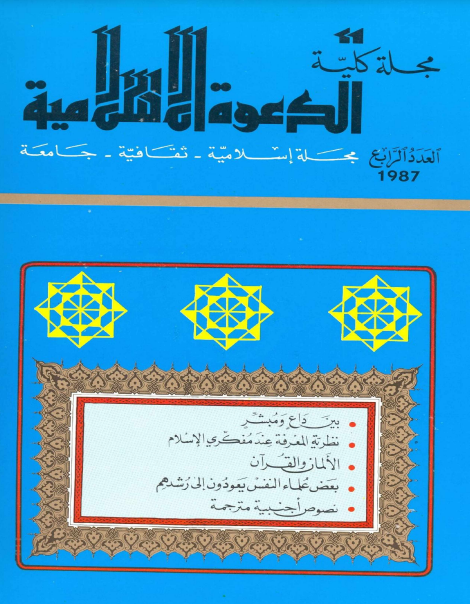
Issue 4 features a diverse collection of research covering Islamic thought, psychology, education, Islamic history, linguistic, and jurisprudential studies. The issue begins with a study on the importance of human nature and its dimensions in Islamic thought, and includes discussions on epistemology among Islamic thinkers and long-term strategies for Islamic education. Jurisprudential topics like zakat on crops and environmental themes such as earth and water in the Quran are also addressed. The issue explores the historical spread of Islam in regions like Kanem and Bornu, and highlights prominent Islamic figures like the Hafiz Baqa ibn Mukhlad al-Qurtubi. It contains important book reviews, translated texts from Western authors on Islamic studies, and linguistic analyses focusing on syntax and Arabic expression. Additionally, research on Arabic manuscripts in Libya and Morocco adds to the richness of the scholarly and cultural content presented in this issue.
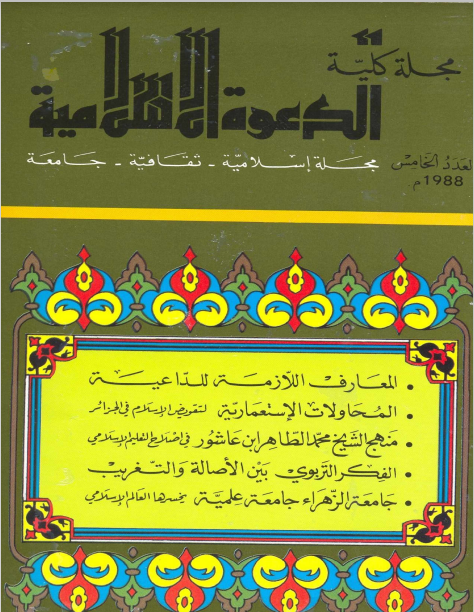
Issue 5 of the Journal of the College of Islamic Call presents a distinguished collection of scholarly and cultural research covering diverse topics in Islamic thought, jurisprudence, education, and history. The issue addresses important subjects such as jurisprudence during the Prophetic era, Jewish beliefs, and the true image of Prophet Muhammad (PBUH). It also includes studies on Quranic psychology, human characteristics in Islamic thought, and discipline between Islamic and modern schools. Historical topics such as the Battle of Ain Jalut, modern naval jihad, and Umayyad policies toward dhimmis are also discussed. Additionally, the issue highlights cultural heritage through research on national libraries and their role, alongside book reviews and translated historical texts, reflecting depth and diversity in Islamic call and Islamic sciences.
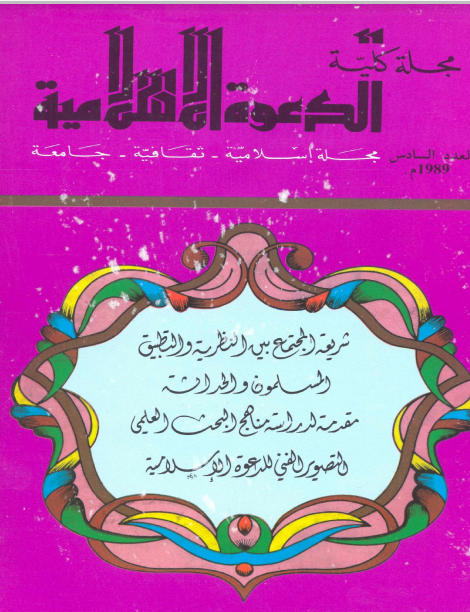
Issue 6 of the Journal of the College of Islamic Call includes a diverse collection of studies that blend jurisprudential, cultural, and historical aspects. The issue opens with research on societal Shariah and its applications, the role of Muslims in modern times and the flourishing Islamic civilization, as well as topics on Islamic call (da'wah) and Islamic diplomacy. It also features important educational studies, including methodologies of scientific research, Islamic education, and the linguistic approach of Al-Abeed in his book "Ghareeb Al-Hadith." Historical topics such as Norman raids on North Africa and England’s history in Egypt are covered alongside studies on Libyan and Andalusian literary heritage. Translated texts highlight Islamic artistry in currency design and Western perspectives on Arabs, reflecting a rich integration of Islamic sciences and cultural studies.
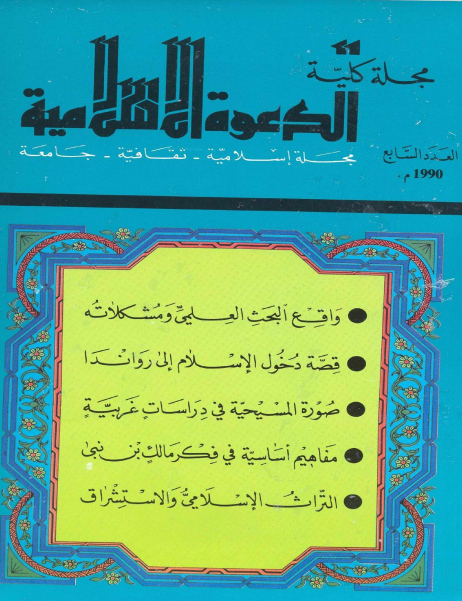
Issue 7 of the Journal of the College of Islamic Call covers a wide range of topics including the reality and challenges of scientific research in the Islamic world, studies on Malik Bennabi's thought, and the science of Quranic occasions. The issue also includes historical research on destructive sects in Muslim history and the unified Islamic work in Senegal. It features articles on the Satanic Verses and Western views of Christianity, along with discussions on culture, mental health, and the flourishing of book publishing in Andalusia. Linguistic and critical analyses of Arabic poetry and the Quran are presented, as well as studies on the Crusader attacks and the story of Islam’s spread. The issue contains important book reviews and translations in Islamic thought and Western philosophy, reflecting rich academic and cultural diversity.
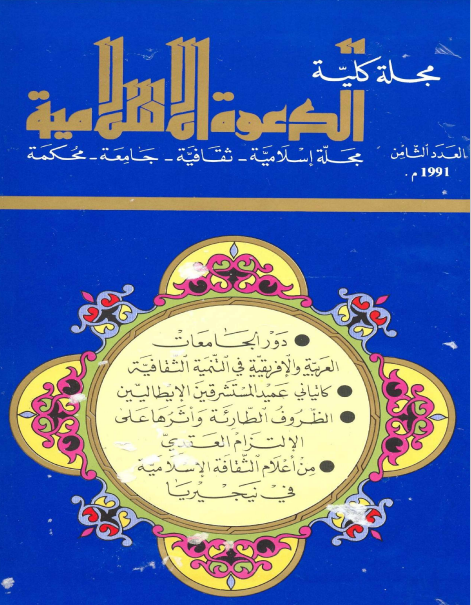
Issue 8 of the Journal of the College of Islamic Call features an outstanding collection of studies discussing the role of Arab and African universities in cultural development, as well as the status of the Arabic language and Islamic culture in distant regions like Bangladesh. It reviews the history of Al-Hisbah authority during the Abbasid era and contractual adherence under emergency conditions in Islamic jurisprudence. The issue explores Arab-Islamic philosophical heritage’s role in shaping the civilizational project and the scientific and cultural life in Andalusia. It includes diverse research in literature and Abbasid poetry, historical topics such as Ibrahim Pasha’s campaign in Syria and the Battle of Al-Zallaqa, along with important book reviews and translated texts on Islamic studies and the spread of Islam in Africa, reflecting rich cultural and academic depth.
Issue 9 of the Journal of the College of Islamic Call offers a rich collection of studies discussing Muslim contributions to sciences, political and social issues such as the status of women and Islamic unity, along with research on Quranic miracles and Islamic tolerance towards other religions. The issue also addresses jurisprudential and legal topics like the philosophy of punishment and the impact of terminal illness on transactions and sales. It includes historical studies on Christianization in West Africa, linguistic research on Arabic syntax and Sibawayh’s views on Arabic letters. Translated texts cover the influence of Islamic Arab thought in West Africa and modern philosophy, accompanied by important book reviews, reflecting the journal’s broad scientific and cultural diversity.
Issue 10 of the Journal of the College of Islamic Call features a distinguished collection of scholarly research covering diverse topics in Islamic sciences, language, rhetoric, education, and Islamic thought. This issue highlights studies on the diversity of Quranic styles and the impact of Quranic readings on meaning variation, alongside discussions on the rapprochement methodology among Islamic jurisprudential schools and the influence of Roman law on Islamic jurisprudence. It also includes research on Islamic history, such as a study on al-Tabari, critical reviews of Quranic and linguistic texts, and investigations into intellectual movements like Sufism and the Baháʼí Faith in relation to colonialism. The issue contains important book reviews and translated texts focusing on Hadith studies, along with a specialized article on organ transplantation from an Islamic perspective, reflecting the journal’s broad scholarly scope and thematic diversity.
Issue 11 of the Journal of the College of Islamic Da'wah includes a diverse collection of research covering Quranic sciences, Quranic psychology, Islamic jurisprudence, Islamic history, and Arabic language studies. Notable topics include The Companions and Contextual Reading, Quranic Miracles in the Story of the People of the Cave, Soul and Mind in the Quran, The Physician’s Responsibility in Islamic Jurisprudence, and The West and Islam. The issue also features translated texts on Islamic identities in Africa and critical studies on orientalists. Additionally, it contains book reviews, rare library materials, information about the journal’s first decade, and student contributions.
Issue 12 of the Journal of the College of Islamic Da'wah includes 31 articles across fields such as jurisprudence, theology, Qur’anic exegesis, Islamic history, linguistics, and Sufism. Key topics include the finality of Prophethood and Muslim unity, Imam Al-Suyuti’s role in jurisprudential ijtihad, the reality of Qur’anic miracles, and Islamic administrative systems. The issue also covers Libyan poetry, linguistic phenomena, Sufi influences, along with book reviews and studies on Andalusian history and the Arabic library. This issue reflects a rich variety of scholarly and cultural Islamic research.
Issue 13 of the Journal of the College of Islamic Da'wah contains 31 scholarly articles covering intellectual, Qur’anic, linguistic, educational, and historical studies. Key topics include the scientific method in Arab tradition, Qur’anic inimitability, conditional clauses in financial contracts, the Black Stone, and livelihood security in Islamic education. The issue also explores prominent figures like Zaki Naguib Mahmoud and Kulthum al-‘Attabi, and presents linguistic studies on grammatical agents and the phenomenon of predominance. It includes contributions on Sufism, Islamic hospitals, translated texts, and book reviews—highlighting the journal’s depth and interdisciplinary range in Islamic and human sciences.
Issue 14 of the Journal of the College of Islamic Da'wah is a peer-reviewed academic volume comprising 33 articles and scholarly contributions across Qur’anic studies, linguistics, history, education, and Islamic thought. Highlights include studies on the linguistic and rhetorical inimitability of the Qur’an, the Mālikī school in Kairouan, education’s role in African cultural identity, Arabic linguistic intuition, and educational principles of reward and punishment in Islam. The issue also features heritage-focused research like Persian manuscripts in the college library and early pre-Islamic poets, alongside a special section honoring writer Ali Mustafa al-Musrati, and book reviews covering works on al-‘Izz ibn ‘Abd al-Salām, Libyan geography, and Kufan grammar. The issue reflects the journal’s depth and diversity in promoting Islamic and Arabic scholarship.
Issue 15 of the Journal of the College of Islamic Da'wah is a peer-reviewed academic volume featuring 37 research papers and articles in Islamic culture, Arabic language, rhetoric, Qur’anic studies, education, thought, history, and literature. Highlights include Sources of Islamic Culture in Nigeria, Ibn Hazm’s Approach to Christianity, Antithetical Rhetoric in the Qur’an, Educational Preparation for Future Arab Culture, and Psychological Care for Muslim Youth. The issue also features linguistic and literary studies such as Ellipsis and Emphasis in the Basmalah and Analysis of the Qafiyah of Ta’abbata Sharran, as well as heritage-focused pieces like Persian Manuscripts in the College Library and A Glimpse into the Life of Sheikh Omar al-Janzouri. This issue reflects the journal’s intellectual richness and multidisciplinary scope.
Issue 16 of the Journal of the College of Islamic Da'wah is a peer-reviewed annual edition featuring 28 academic papers spanning Qur’anic studies, Hadith, Islamic jurisprudence, Arabic language, rhetoric, education, history, and translation. Notable topics include The Qur’an’s Method in Presenting Rulings, Analogy and Consensus in the Development of Islamic Law, The Influence of Tripoli Scholars on the Kairouan Hadith School, Abrogators in al-Farrā’s Exegesis, and A Scientific Analysis of Adolescent Deviance. The issue also explores literary and linguistic themes such as Satire in Ziyād al-Aʿjam’s Poetry, Semantic Unity in the Qur’an, text editing methodology, lexicography, and the Yemeni tribal migration in early Islamic conquests. The edition reflects the journal’s commitment to bridging Islamic heritage with contemporary scholarly inquiry.
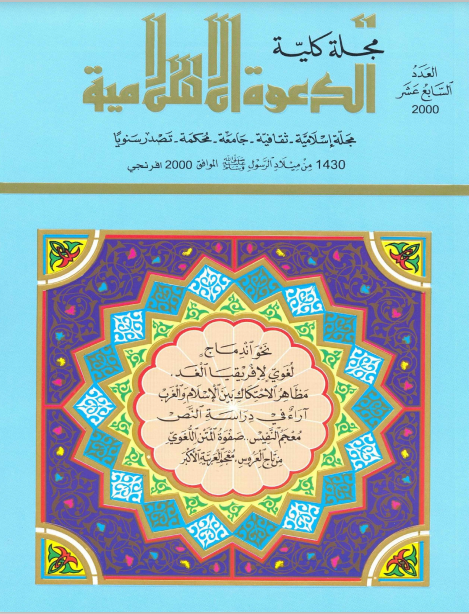
Issue 17 of the Journal of the College of Islamic Da'wah is a peer-reviewed annual edition featuring 22 scholarly articles spanning Islamic thought, linguistics, education, history, Sufism, Orientalism, theology, and Qur’anic studies. Key topics include linguistic diversity in Africa, tolerance in Islam, Islamic legal adaptation of contracts, Sufism and politics, and scientific approaches to Qur’anic interpretation. The issue also presents in-depth linguistic discussions on parsing, morphology, Qur’anic storytelling, and language reform. Historical articles explore Libyan scholars and describe Tripoli through travel accounts.
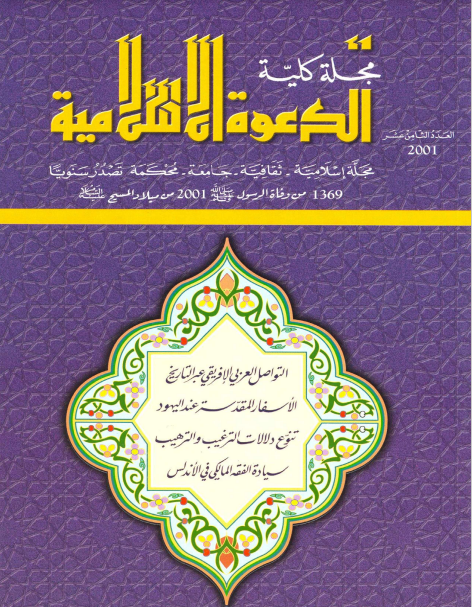
Issue 18 of the Journal of the College of Islamic Da'wah is a peer-reviewed annual volume containing 43 scholarly contributions, including research papers and book reviews. The issue covers diverse fields such as Arabic language, Qur’anic studies, Islamic law, education, history, and literary criticism. Key topics include the spread of Arabic in Nigeria, children’s rights in Islam, spiritual care for Muslim youth, Prophetic medicine, al-Razi’s Qur’anic exegesis, modern linguistics, and praise and criticism in early Arabic poetry. It also features literary studies on Andalusian texts, the poetry of al-Maʿarri and Muftī Zakaria, and closes with two book reviews: A New Perspective on the Prophet’s Biography and Islam: Certainty, Not Conditioning. The issue reflects the journal’s rich and multidisciplinary academic scope.
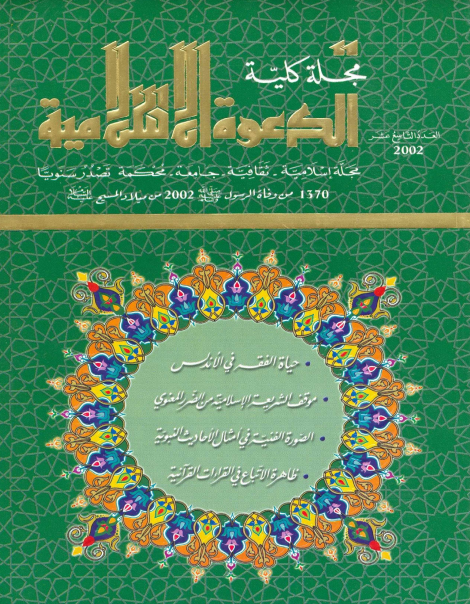
Issue 19 of the Journal of the College of Islamic Da'wah is a peer-reviewed annual publication featuring 27 research papers across various fields, including Qur’anic readings, Islamic jurisprudence, Arabic language, history, literature, and cultural studies. Highlights include The Phenomenon of Ittibāʿ in Qur’anic Recitations, Moral Harm in Islamic Law, Arabic and Globalization, and Critique of Orientalism. The issue also features historical and literary studies on Andalusia, Tripoli, and the legacy of Sheikh al-Zawi. It concludes with a section titled “Islamic Insights,” offering concise scholarly reflections under titles like Fatwa, Refutation, Africa, Afghanistan. This issue reflects the journal’s diversity and balanced engagement with both heritage and contemporary issues.
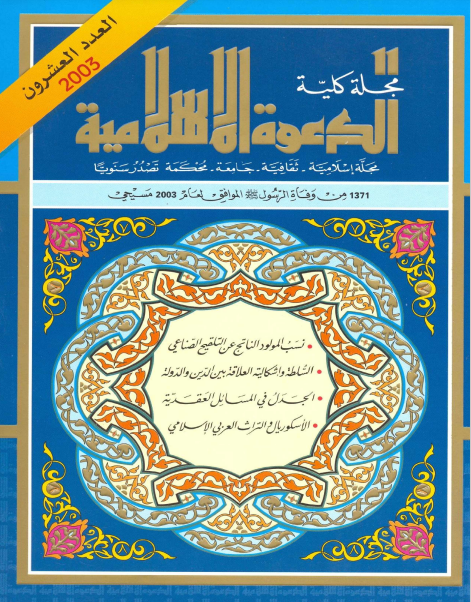
**Issue 20 of the Journal of the College of Islamic Da'wah** is a peer-reviewed annual journal featuring **40 diverse papers** in Islamic studies, culture, language, and literature. Topics include jurisprudence, Qur’anic studies, education, history, and linguistic analysis. Notable articles cover themes like *the role of the Muslim family*, *Islamic rulings on divorce*, *the theory of motive in Islamic law*, and *the use of passive voice in Arabic*. The issue concludes with a special section titled “Islamic Insights,” presenting short scholarly reflections under unique titles. This issue highlights the journal’s broad academic and cultural scope.
يضم هذا العدد بحوثًا متنوعة، منها: محمد بن الحسن الشيباني وتهمة الإرجاء، الغلو في الدين، التدابير الوقائية لمنع ارتكاب الجريمة في الشريعة الإسلامية، إطلالة على كتاب المعيار الجديد، المادية في فكر المذاهب المعاصرة، الإسلام والبيئة، التقديم والتأخير في القرآن الكريم، الثقافة العربية الإسلامية وتحديات العولمة، من بلاغة الضمائر في القرآن الكريم، ابن خلدون وبعض آرائه الأبستيمولوجية، الفكر الأندلسي والافتراضات الأيديولوجية للنهضة الأوروبية، حياة سلطان العلماء العز بن عبد السلام، وغيرها من البحوث في مجالات العلوم الشرعية واللغوية والإنسانية.
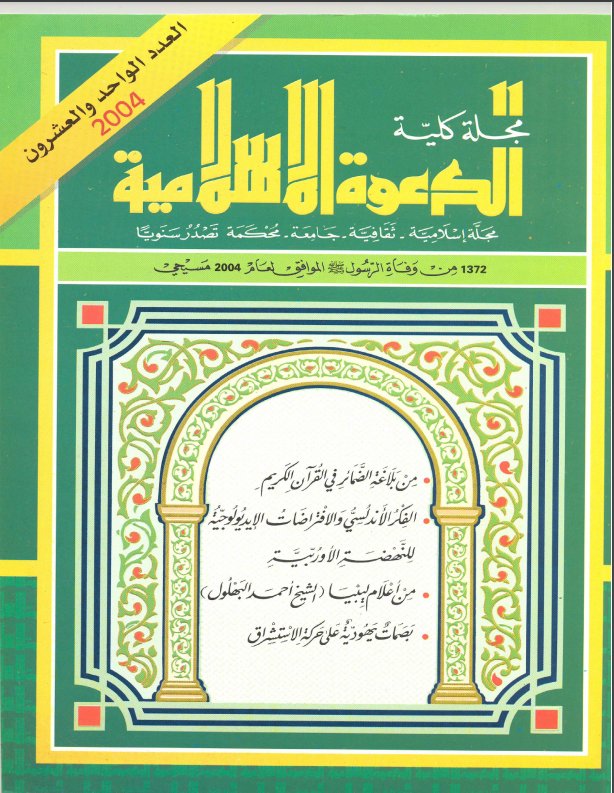
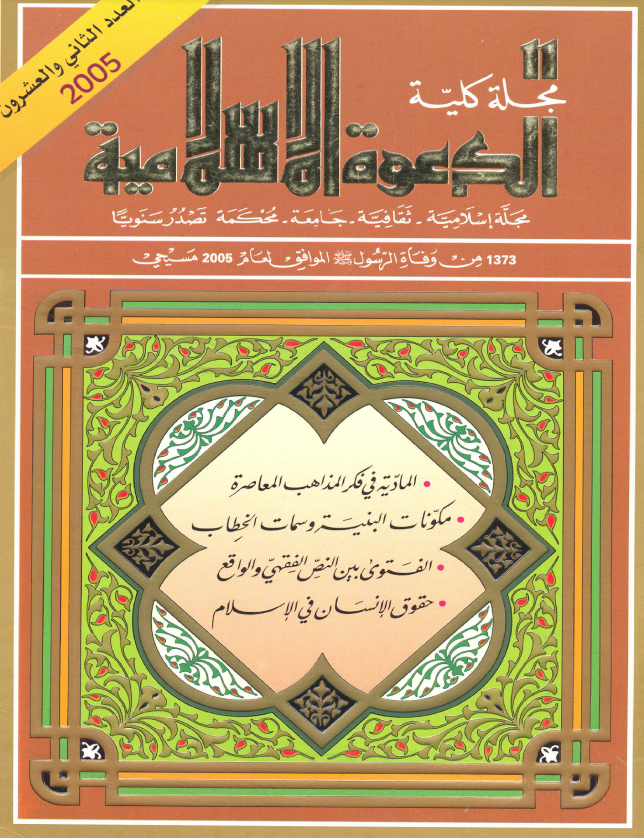
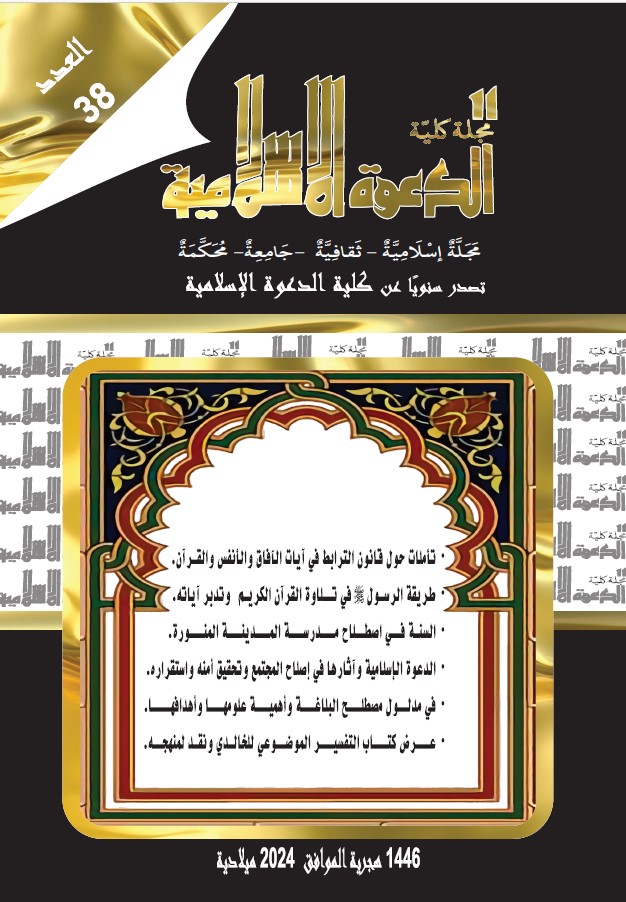
يضم العدد 22 من *مجلة كلية الدعوة الإسلامية* بحوثًا محكّمة متنوعة من باحثين في جامعات مختلفة، في مجالات الدراسات الإسلامية واللغوية والأدبية والعامة، منها: - *عموم الرحمة وعالمية الإسلام، حقوق الإنسان في الإسلام، أثر الفقه المالكي في القانون المدني الفرنسي، التفاعل العقدي والحضاري بين الغرب الإسلامي والسودان الأوسط والغربي، الفتوى بين النص الفقهي والواقع.* - *أحكام النداء وأسراره في القرآن الكريم، ذود عن نحو الضاد، مختصر شرح لامية العجم، ربط تيسير القواعد النحوية بالقرآن الكريم.* - *جزيرة العرب مهد الرسالة الإسلامية، الرحلة إلى الشرق والغرب وحركة التنوير، ابن رشد بين الحقيقة الواحدة وتعدد الرؤية، المادية في فكر المذاهب المعاصرة (الحلقة الثانية)، تطور الفكر الجغرافي في الحضارة الإسلامية، مدخل إلى العولمة.* - بالإضافة إلى مقالات قصيرة ضمن قسم "معارف إسلامية"، مثل: *اكتساب، إكراه، أكوان، التباس*، وغيرها من البحوث المتخصصة في العلوم الشرعية واللغوية والإنسانية.
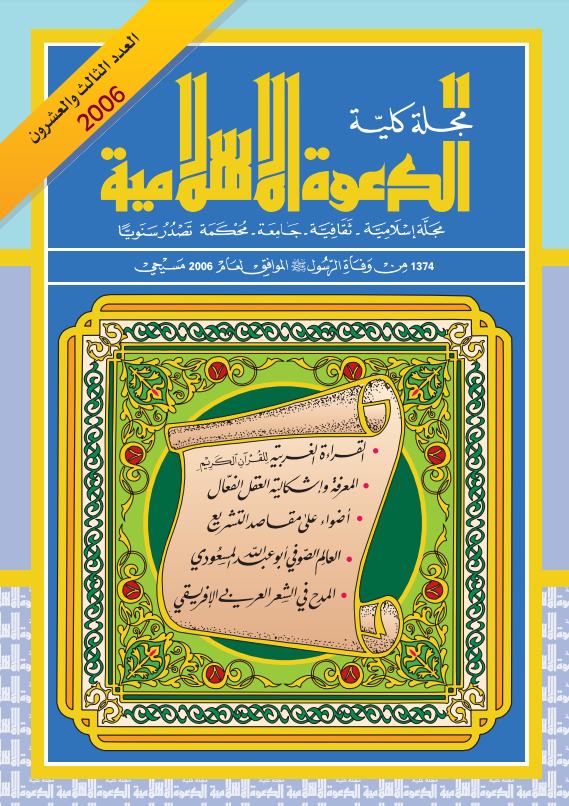
يضم العدد 23 من *مجلة كلية الدعوة الإسلامية* بحوثًا من جامعات مختلفة في مجالات متنوعة، منها: القراءة الغربية للقرآن، مقاصد التشريع، الحيل الفقهية، المعاني المتعددة للكلمة القرآنية، التغاير التصريفي بين القراءات، المدح في الشعر العربي الأفريقي، آراء الغزالي التربوية، الآثار القانونية للملكية الفكرية، العالم الصوفي المسعودي، وغيرها من الدراسات في العلوم الإسلامية واللغوية والإنسانية.
يضم العدد 24 من *مجلة كلية الدعوة الإسلامية* مجموعة بحوث من جامعات مختلفة تناولت موضوعات في الدراسات الشرعية واللغوية، مثل: منهج القرآن في الدعوة، القراءة الغريبة، مقاصد الشريعة، الصوت اللغوي عند علماء التجويد، بلاغة الفواصل القرآنية، الفكر اللغوي عند ابن خلدون، فلسفة الغزالي، الصكوك في الحضارة الإسلامية، إضافة إلى مقالات في المعارف الإسلامية حول مفاهيم مثل: الأم، الإمامة، والأمة.
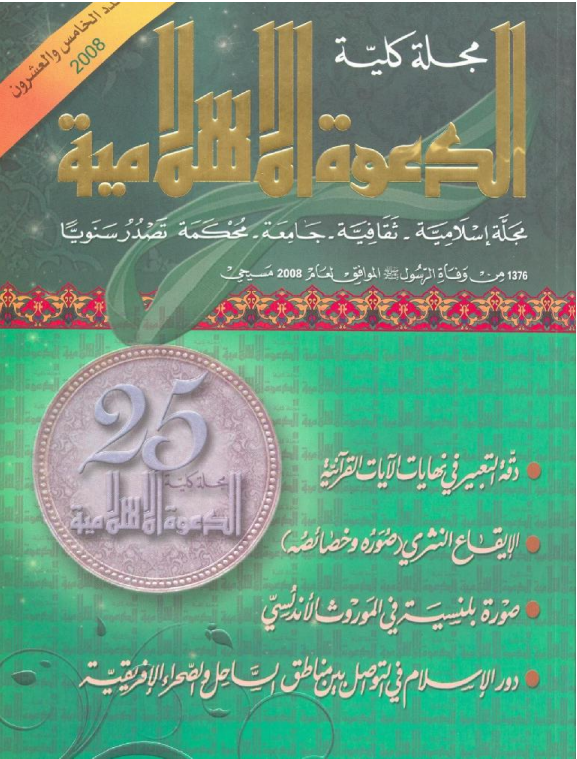
يضم العدد 25 من *مجلة كلية الدعوة الإسلامية* بحوثًا متنوعة في الدراسات الإسلامية واللغوية والعامة، من أبرزها: دقة التعبير في نهايات الآيات، التصوف عند الحسن اليوسي، الطلاق وأثره الأسري، القلب المكاني في العربية، الإيقاع النثري، الشذوذ اللغوي، دور الإسلام في التواصل بين الساحل والصحراء، انتشار الإسلام في إفريقيا، إضافة إلى مقالات معرفية حول مفاهيم مثل: أمر، أمل، وأمن.
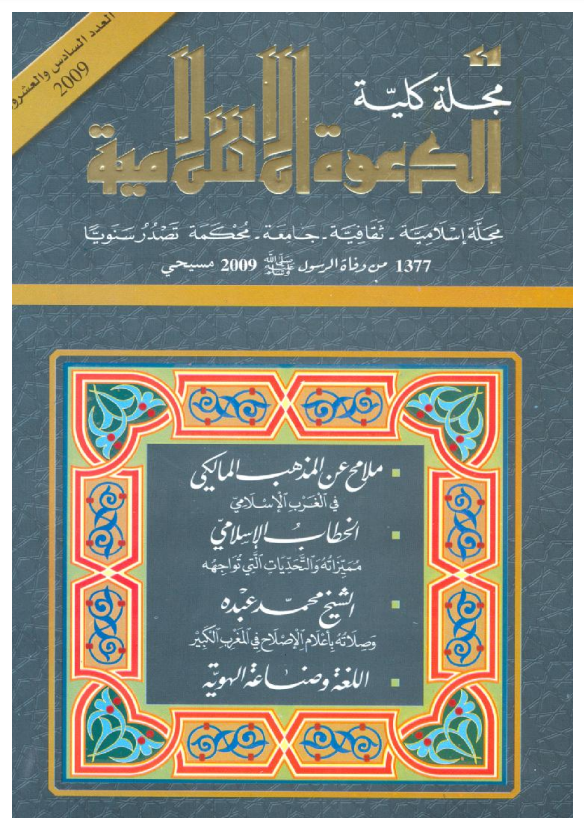
يتضمن العدد 26 من *مجلة كلية الدعوة الإسلامية* بحوثًا متنوعة في الفقه، والعقيدة، واللغة، والتاريخ، والتربية، من أبرزها: المذهب المالكي في الغرب الإسلامي، تحليل البيع وتحريم الربا، الإسلام والوثنية في غينيا، الإيمان والإلحاد، البهائية وتأويل القرآن، بلاغة الفواصل في العاديات، اللغة وصناعة الهوية، أدبية ابن حزم، التعليم في طرابلس الحفصية، أثر الزهراوي في الطب الأوروبي، إضافة إلى مقالات معرفية حول مفاهيم: الأنا، الإنجيل، الإنسان، الأنفة، والأنام.
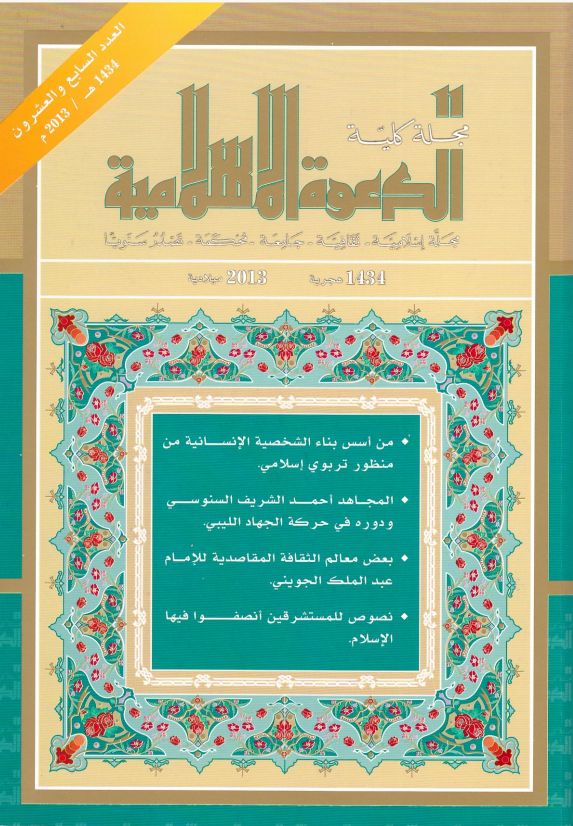
العدد 27 من *مجلة كلية الدعوة الإسلامية* يتضمن مجموعة من البحوث في مجالات مختلفة، من أبرزها: - **الدراسات الإسلامية**: نصوص للمستشرقين أنصفوا فيها الإسلام، المقاطع الصوتية في القرآن الكريم من خلال الوقف على الهمز، جهود علماء الغرب الإسلامي لمكافحة التطرف الديني، والقاعدة الفقهية "كل شيء إلى القرآن فهو للتخيير". - **الدراسات اللغوية والأدبية**: مناهج ابن المعتز في إبراز عناصر الشخصية الأدبية، مفردات الراغب بين يدي السمين الحلى، ودراسة في تجربة محمود درويش الشعرية. - **الدراسات العامة**: من أسس بناء الشخصية الإنسانية من منظور تربوي إسلامي، دور المناهج الدراسية في تنمية قيم المصالحة، ودراسة حول ضعف الكفاءة المهنية لدى المعلمين الجامعيين. - **المعارف الإسلامية**: دراسات حول "أهل" و"أيوب".
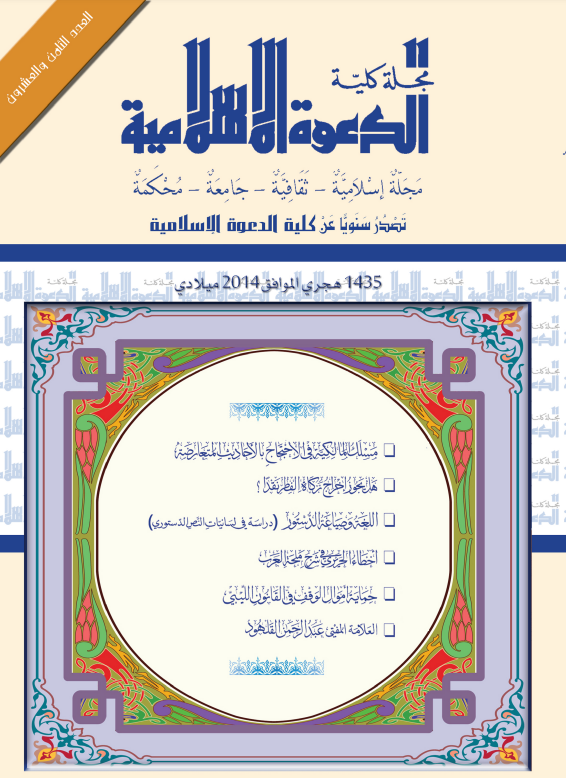
العدد 28 من مجلة كلية الدعوة الإسلامية يشمل بحوثًا في مجالات متنوعة، منها الدراسات الإسلامية التي تتناول جهود المحدثين، مسائل الفقه الإسلامي، والاقتصاد الإسلامي في المصارف. كما تشمل الدراسات اللغوية والأدبية دراسات عن اللغة وصياغة الدستور، والأدب العربي القديم، والنحو في الغرب الإسلامي. أما الدراسات العامة، فتعرض مواضيع تتعلق بالقانون الليبي، التجارة في العصر الحفصي، وأعلام علمية إسلامية. وأخيرًا، تبرز المعارف الإسلامية حول مفاهيم مثل الأوزاعي والإيجاب.
العدد 29-30 من مجلة كلية الدعوة الإسلامية يحتوي على مجموعة من البحوث في مجالات متنوعة، تشمل: **الدراسات الإسلامية**: تتناول مواضيع مثل متشابه القرآن، العوارض وتأثيرها في الأحكام، صناعة التحويل في الأسانيد، مسائل فقهية تتعلق بزكاة العقارات والتجميل في الفقه الإسلامي، بالإضافة إلى قضايا مثل حكم الأذان الأول وادعاءات النبوة بعد ختمها. **الدراسات اللغوية والأدبية**: تتعلق بفنون الاستشهاد بالقرآن في النحو، تأثير القرآن في الشعر، مسائل نحوية، وأثر فن الموشح في النقد الأدبي. كما تتطرق إلى قضايا مثل النشأة الخصوصية للغة العربية. **الدراسات العامة**: تشمل تأثير العولمة على القيم ودور المعلم في مواجهتها، العمل الإسلامي في السنغال، والقيم الإسلامية في المجتمع الصيني. بالإضافة إلى موضوعات جغرافية وتاريخية مثل العلاقات التجارية بين مدن جنوب ليبيا وجنوب الصحراء الإفريقية. **المعارف الإسلامية**: تشمل موضوعات مثل "الباء" و"الباب" في المعارف الإسلامية.
**العدد 31-32 من مجلة كلية الدعوة الإسلامية** يضم هذا العدد بحوثاً محكمة في الدراسات الإسلامية، مثل: تدوين المدونة ودور الوقف الاقتصادي، ومسألة كسب الأفعال، والهدي النبوي في الطب، إضافة إلى بحوث لغوية وأدبية كحضور العربية في الأندلس، وتحقيق نصوص شعرية، ودراسات فنية ونحوية. كما يتناول أبحاثاً عامة كأثر الهجرات الأندلسية، ودور التربية في التنمية، وظاهرة العلمانية، وتعليم العربية في إفريقيا. جميعها من إنتاج باحثين متخصصين من جامعات مختلفة، لتغطية جوانب علمية ودعوية متنوعة.
تضمن العدد 34-33 من مجلة كلية الدعوة الإسلامية مجموعة من البحوث القيمة لكبار العلماء من جامعات مختلفة. تناولت هذه البحوث قضايا متنوعة في الدراسات القرآنية، والحديث النبوي الشريف، وأصول الفقه ومقاصده، بالإضافة إلى موضوعات في الفقه الإسلامي وأحكامه. كما اشتمل العدد على دراسات معمقة في اللغة العربية ونحوها وبلاغتها، وتحقيق لنصوص تراثية هامة. ولم يغفل العدد الجوانب التاريخية والحضارية، حيث قدم بحوثًا حول الحضارة العربية الإسلامية في مناطق مختلفة، بالإضافة إلى دراسات في التاريخ الإسلامي المحلي. ويمكن الإشارة إلى وجود بحوث أخرى في العلوم الإنسانية والاجتماعية والتاريخية ضمن هذا العدد المتميز.
في العدد 35 من مجلة كلية الدعوة الإسلامية، تم تناول مجموعة من البحوث التي تغطي موضوعات إسلامية ولغوية متنوعة. شملت البحوث تطهير المجتمع من آثار الجاهلية في النكاح، ومعاني لفظ اللسان في القرآن، وتوجيه الآيات المتشابهة. كما تم استعراض أساليب التدريس الفعالة في النصوص القرآنية، ودفاع الإمام ابن عبد البر عن أحاديث أعلها الإمام مسلم، بالإضافة إلى تناول شبهة دعوة الشيخ محمد بن عبد الوهاب. تضمّن العدد أيضاً بحوثاً عن المملكة الفقهية وأهمية إدارة الأوقاف الإسلامية، والعلاقة بين القراءات القرآنية واللهجات. كما تم تناول بلاغة الإيجاز والإطناب القرآني، والشواهد اللغوية في شعر الفرزدق، وأشكال تغير الدلالة في الشعر. هذه البحوث تعكس إسهامات بارزة من كبار العلماء من جامعات مختلفة، وتشمل مجالات متعددة مثل العلوم الإنسانية والشرعية واللغوية وغيرها.
في العدد 36 من مجلة كلية الدعوة الإسلامية، تم تقديم مجموعة من البحوث التي تتناول موضوعات إسلامية ولغوية متنوعة. ركز أحد البحوث على تصريف الآيات الدالة على طاعة الله والرسول ومقاصدها، بينما تناول آخر مقاصد التشريعات المالية في سورة البقرة. كما تم استعراض تنوع ألفاظ الكسب والدعاء في القرآن الكريم ومعانيها، بالإضافة إلى دراسة لفظ اللغو. شملت البحوث أيضاً حق الإنسان في الحياة في القرآن، ومعالم الاستدلال بالسنة عند القرطبي. كما ناقش أحدها الخلاف بين الأشاعرة والماتريدية، ومنهج الأصوليين في الدلالات. تطرق العدد إلى موضوعات مثل التدرج التشريعي في الشريعة الإسلامية، وطاعة ولي الأمر وآثارها، ودراسة نقدية لجواهر الدرر. كما تم تناول الحذف في القرآن الكريم من منظور نحوي بلاغي، ومفهوم الهزيمة النفسية. وأخيراً، تم تقييم الممارسات المهنية للأستاذ الجامعي في كلية الدعوة الإسلامية من وجهة نظر الطلاب. تعكس هذه البحوث مساهمات بارزة من كبار العلماء من جامعات مختلفة، وتشمل مجالات متنوعة مثل العلوم الإنسانية والشرعية واللغوية وغيرها.
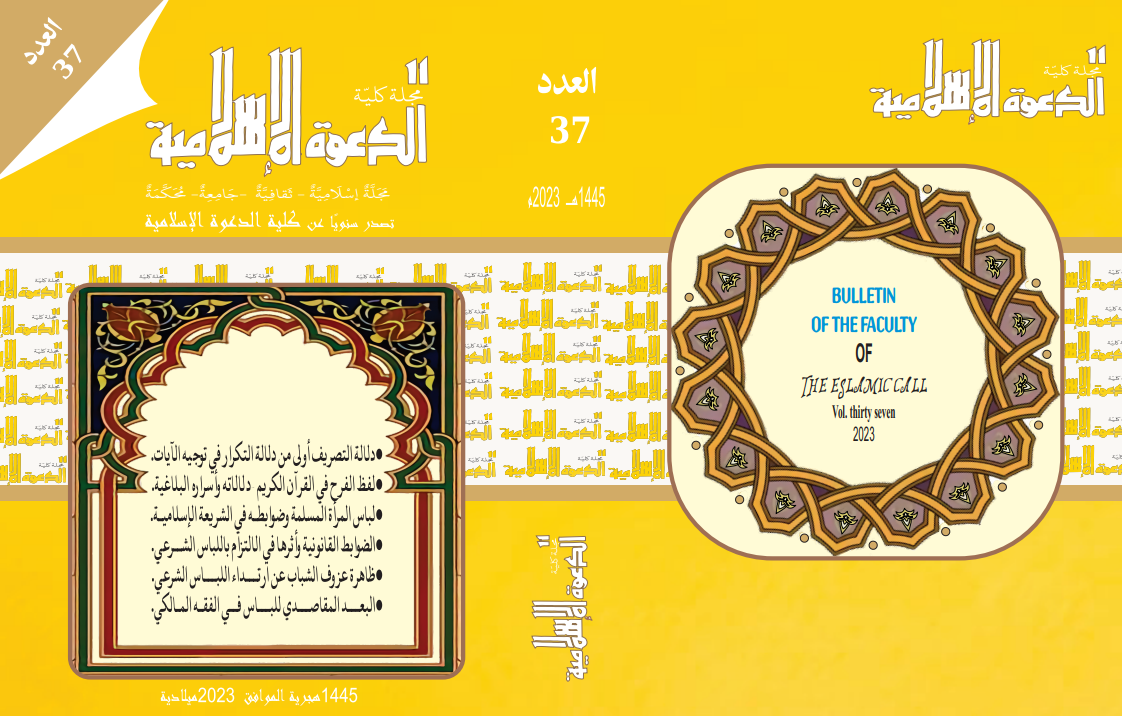
في العدد 37 من مجلة كلية الدعوة الإسلامية، تم عرض مجموعة من البحوث التي تتناول مواضيع إسلامية ولغوية متنوعة. بدأ العدد ببحث حول دلالة التصريف في الآيات، متناولاً دلالات لفظ الفرح في القرآن الكريم. كما تم استعراض تطبيقات الزكاة المعاصرة وأثر الأسر العلمية الليبية في خدمة المذهب المالكي. شملت بحوث الندوة العلمية حول اللباس الشرعي موضوعات تتعلق بضوابط لباس المرأة المسلمة، وأثر الضوابط القانونية في الالتزام باللباس الشرعي، بالإضافة إلى دراسة الحجاب الشرعي وآثاره. كما تم مناقشة ظاهرة عزوف الشباب عن ارتداء اللباس الشرعي، والبُعد المقاصدي للباس في الفقه المالكي. في مجال الدراسات اللغوية، تم تناول فن الزجل وأثره في حركة النقد القديم. كما تم عرض مخطوطات نادرة من القرن السابع الهجري، مشيراً إلى إسهامات العلماء في المكتبات الليبية ودورهم في خدمة العقيدة الإسلامية. البحوث تعكس مساهمات بارزة من كبار العلماء من جامعات مختلفة، وتشمل مجالات متنوعة مثل العلوم الإنسانية والشرعية واللغوية وغيرها.
في العدد 17 من مجلة كلية الدعوة الإسلامية، تم تناول مجموعة من البحوث التي تغطي مواضيع إسلامية وثقافية متنوعة. بدأ العدد ببحث حول التعدد اللغوي في إفريقيا ونتائجه على الفوارق الثقافية، تلاه دراسة حول التسامح في الإسلام ودوره في القضاء على التعصب. كما تم تناول إشكالات العقل الإسلامي في النظر والعمل، بالإضافة إلى موضوع القضاء والقدر في الإسلام. شملت البحوث أيضاً العقود ومعنى تكييفها الشرعي، ودراسة الحركة الاستشراقية وسبل مواجهتها. كما تم تناول العلاقة بين الصوفية والسياسة، والاتجاه العلمي في تفسير القرآن الكريم. تناولت البحوث الأخرى الحاجات النفسية والاجتماعية للأطفال في إطار التربية الإسلامية، وخصائص القصة القرآنية، وآراء في دراسة النصوص. كما تم استعراض أصول عربية محتملة لقصص وحكايات إسبانية، ومحاولات الإصلاح اللغوي. تطرق العدد أيضاً إلى اختلاف الإعراب وتأثيره في الوقف والابتداء، وأساليب الشرط في ضوء نظرية العامل، ودراسة التصريف في الدراسات القرآنية. بالإضافة إلى ذلك، تم تناول ملامح ثقافية عن علماء ليبيا، ووصف طرابلس الغرب في الرحلة التيجانية.